




- Home
- News
- EU Bans Destruction of Unsold Apparel from July 19, 2026 — What It Means for Brand Sourcing Teams

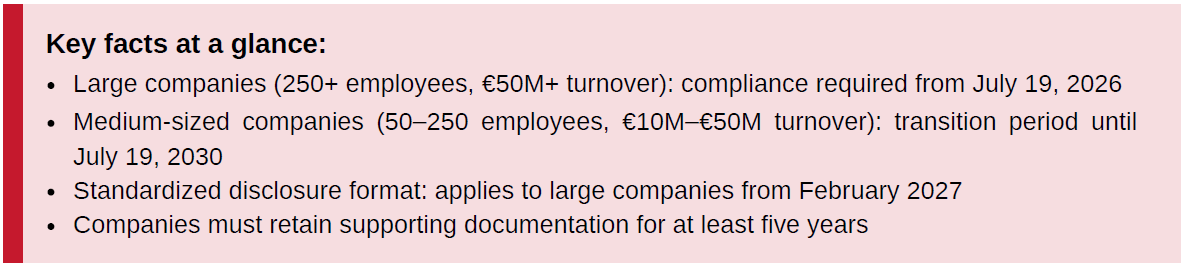
Starting on July 19, 2026, large companies operating in the European Union (EU) are prohibited from destroying unsold apparel, clothing accessories, and footwear under the Ecodesign for Sustainable Products Regulation (ESPR).
Textiles are the first product category subject to this regulation, marking a significant step toward a more circular economy in the fashion industry. In February 2026, the European Commission also adopted a Delegated Regulation and an Implementing Regulation that clarify the specific circumstances under which destruction is still permitted, helping ensure consistent enforcement across the EU.
Why This Matters for Apparel Brands
The European Commission estimates that 4–9% of unsold textiles in the EU are destroyed without ever being used, resulting in approximately 5.6 million tonnes of carbon dioxide (CO₂) emissions each year — roughly equivalent to Sweden's total net greenhouse gas emissions in 2021.
The European Environment Agency (EEA) further estimates that this corresponds to approximately 264,000 to 594,000 tonnes of textiles destroyed annually. As a result, unsold inventory management is no longer merely an internal cost consideration; it is becoming a regulated compliance issue subject to disclosure requirements.
For sourcing teams, this translates into several practical shifts:
-
Tighter inventory forecasting:
Overproduction can no longer be quietly resolved through destruction, pushing demand planning closer to actual sell-through and potentially reshaping minimum order quantity (MOQ) and stock keeping unit (SKU) strategies.
-
Higher costs for managing returns and defective inventory:
Because exemptions require specific, documented justification, brands need more robust return grading, inspection, and recordkeeping processes instead of relying on simple write-offs.
-
Disclosure pressure extending upstream:
Although fabric suppliers are not directly subject to the destruction ban, brand owners responding to disclosure requirements are increasingly asking upstream partners to provide information on product durability, repairability, and recyclability to support sustainability reporting.
-
Growing demand for resale, refurbishment, and donation:
Companies are encouraged to prioritize reuse, refurbishment, or resale over disposal, increasing expectations for product durability and quality consistency. Products that cannot be effectively reused or refurbished are less likely to retain value within circular business models.
-
Longer-term sourcing planning becomes increasingly important:
Although medium-sized companies have until 2030 to comply, disclosure expectations from large brand customers often extend throughout the supply chain well before regulatory deadlines.
Reducing Waste Risk Starts at the Fabric Level
Unsold and discarded inventory rarely results from a single factor. More often, it reflects the combined impact of product design, pattern-making, fabric performance, and demand forecasting.
From a material perspective, durable fabrics that maintain their performance over repeated wear and exposure to varying weather conditions can help reduce product failures and premature replacement. This, in turn, may help brands reduce waste while increasing the likelihood that products remain
suitable for resale, repair, or other circular business models.
At HWAFUNE, we have long specialized in high-performance fabrics for outdoor and watersports applications.
We also continue to monitor evolving EU sustainability regulations—including the Ecodesign for Sustainable Products Regulation (ESPR), restrictions on per- and polyfluoroalkyl substances (PFAS), and the Digital Product Passport (DPP)—to help brand partners incorporate regulatory considerations into product development from the outset rather than responding after products have already entered production.
Frequently Asked Questions (Q&A)
Q: Does this ban only apply to apparel manufactured within the EU?
A: No. The ban applies to large companies operating in the EU, regardless of where the products were manufactured.
Q: Can medium-sized companies ignore this until 2030?
A: Legally, yes, the compliance deadline is 2030. In practice, however, upstream disclosure pressure often arrives earlier; many medium-sized suppliers working with large brand partners may be asked for supporting data well before their own deadline.